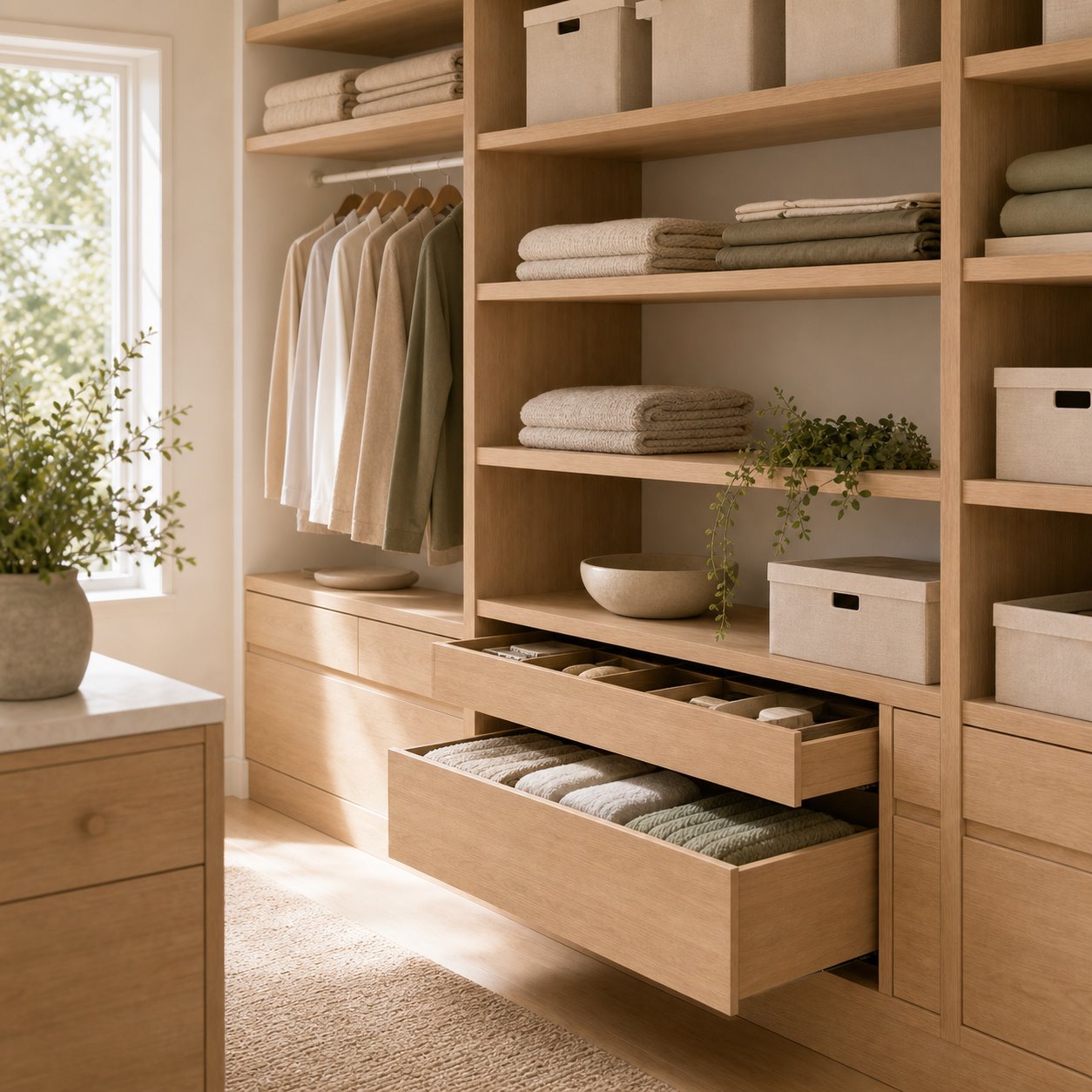
1. Begin with the daily zone
Reserve the easiest-to-reach rail, shelf, or drawer for the pieces you use most often. Moving occasional items away from this zone reduces searching and keeps the daily routine clear.
2. Group by real routines
Categories such as work, weekends, exercise, and special occasions can be more useful than sorting only by garment type. Choose the system that matches how you actually get dressed.
3. Give every shelf a purpose
Define what belongs on each shelf before adding containers. A clear purpose prevents open surfaces from becoming a holding area for unrelated items.
4. Use consistent hangers
Uniform hangers create even spacing and a quieter visual line. They also make it easier to see when a rail is reaching comfortable capacity.
5. Keep smaller items visible
Use divided trays or shallow organizers for belts, scarves, jewelry, and accessories. When small items have boundaries, they are easier to return after use.
6. Use height thoughtfully
Store seasonal or rarely used items higher up, and keep a safe step stool nearby if needed. Label closed containers so their contents remain easy to identify.
7. Protect breathing room
A little open space makes the whole closet easier to use. Avoid filling every rail and shelf; leave enough room to remove and replace items without disturbing the rest.
8. Create a decision basket
Keep one small basket for pieces that need repair, cleaning, donation, or another decision. Empty it on a regular schedule so it does not become permanent storage.
9. Reset in five minutes
At the end of the week, return stray items, straighten one shelf, and clear the floor. A short repeatable reset is usually easier to maintain than an occasional full overhaul.
10. Adjust after living with it
Use the system for two weeks, then notice where items still collect. That friction is useful information: move a basket, change a category, or simplify the arrangement until it fits.