Home inspiration / Living spaces
Small Details, a More Useful Living Room
Living rooms work hard: they welcome, relax, gather, and adapt. A few discreet storage decisions can protect that sense of ease without making the room feel managed.
The idea
Solve the little frictions first.
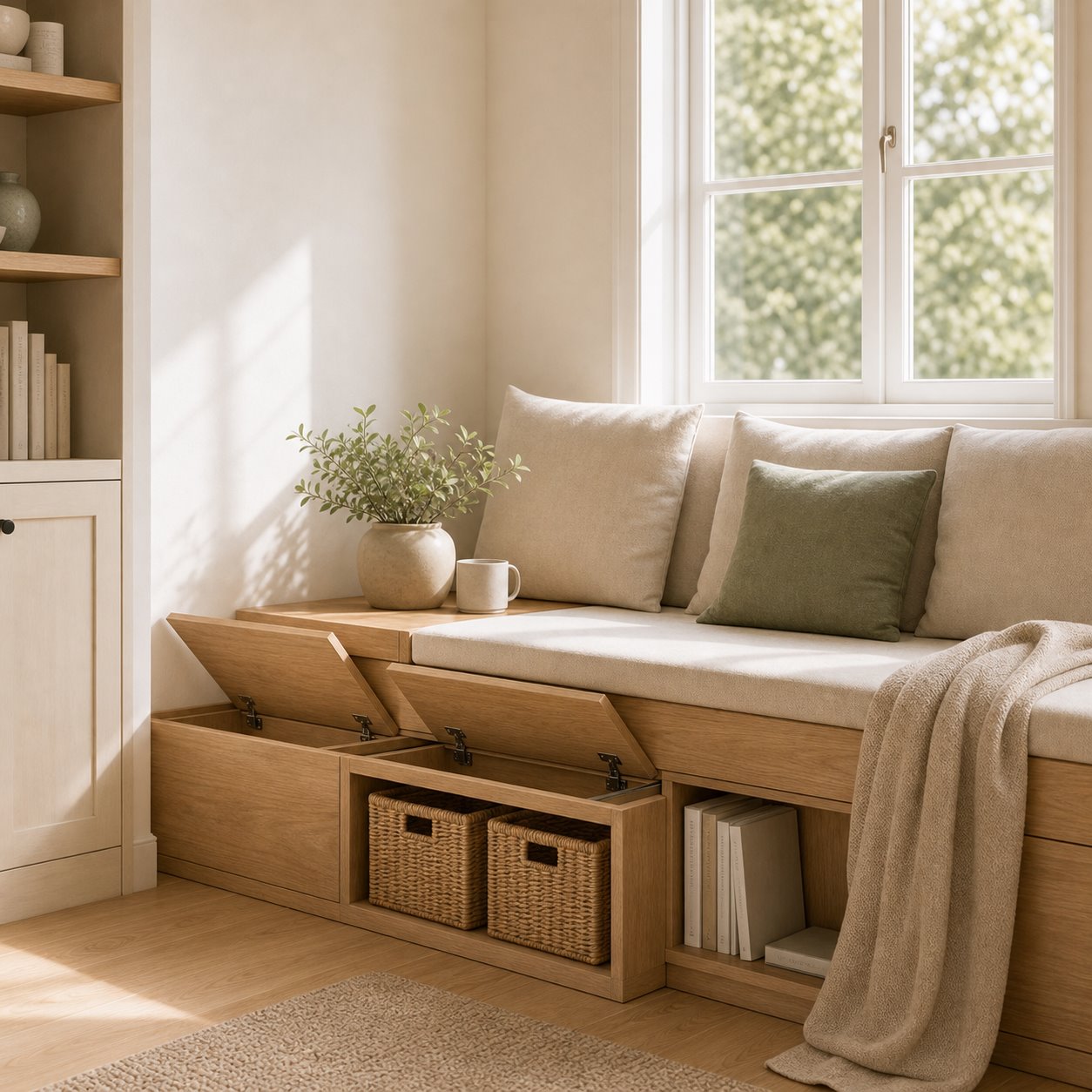
A room often feels calmer when one recurring problem is removed: blankets have a nearby basket, remotes return to a tray, or occasional items disappear into a storage bench.
Look for solutions that belong visually in the room. Warm materials, rounded forms, and hidden capacity can add usefulness while keeping the atmosphere light and comfortable.
What to notice
- What is left out at the end of the day
- Where each activity naturally takes place
- Furniture that could provide hidden capacity
- Whether storage interrupts movement or light
Design principles
Let practical storage feel part of the room
Use furniture twice
A bench, side table, or ottoman with concealed storage can add function without adding another visual element.
Keep daily items close
Place blankets, remotes, books, and chargers within reach of where they are used, then give each a discreet home.
Repeat materials and tones
Consistent baskets, warm wood, and soft neutral colors help practical storage feel like part of the room.
Put it into practice
Improve one detail, then observe
Resist reorganizing the whole room at once. A focused improvement is easier to evaluate and more likely to become a lasting habit.
-
01
Find the friction point
Notice the small object or repeated action that makes the room feel untidy at the end of each day.
-
02
Choose the smallest solution
Add only enough storage to solve that specific problem while preserving open space and easy movement.
-
03
Test it for one week
Live with the new placement before adding more. Adjust the system if returning items does not feel effortless.